
 NAVISH NOOR· Aug 1, 2026
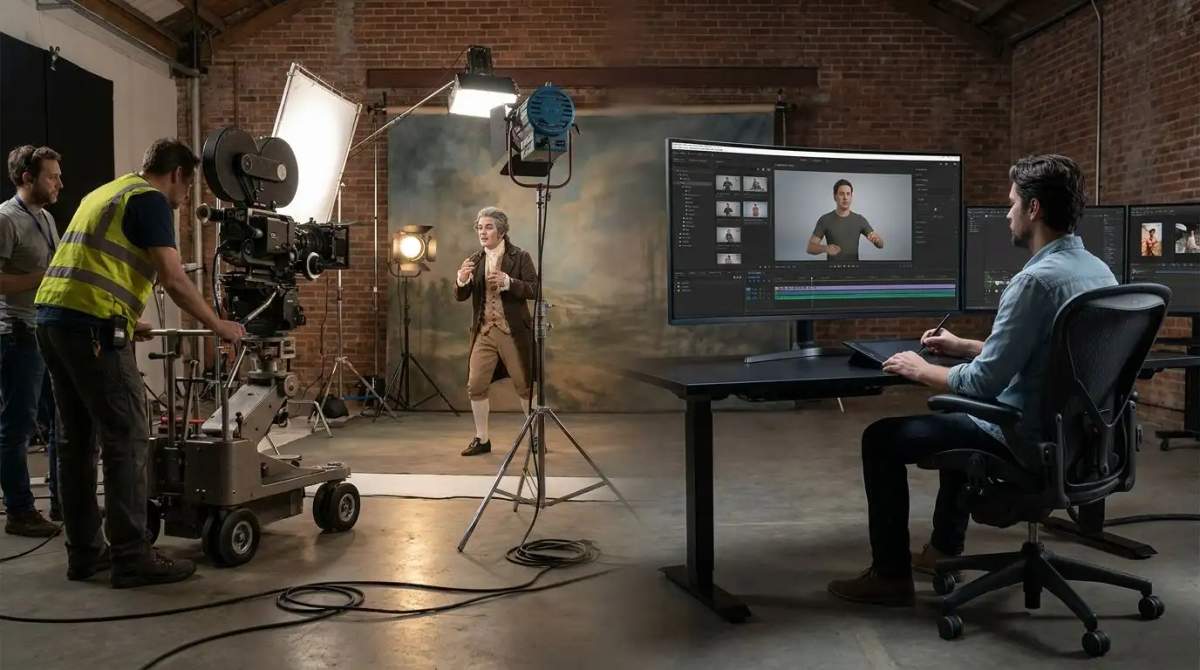
There's a common misconception that AI video production and traditional studio production are competitors, and a brand has to pick one permanently.
In practice, most modern production studios already use AI as part of their workflow — the real comparison isn't AI vs. traditional, it's understanding what each approach is actually optimized for.
What Traditional Studio Production Does Well
- High-end brand films and commercials requiring real locations, actors, and cinematography
- Complex live-action shoots (product demos with physical products, testimonials with real customers)
- Projects where authenticity of a real, specific person matters (founder story, executive interview)
- One-off flagship campaign pieces meant to run for a long time
What AI-Assisted Production Does Well
- High-volume content needs (weekly social posts, multiple ad variations)
- Fast turnaround on scripted, presenter-style content (onboarding, explainers, avatar-led ads)
- Multi-language localization without re-shooting
- Iterating quickly on what's working (new hooks, new cutdowns, new formats)
- Lower cost-per-video for recurring content needs
Where the Two Approaches Actually Overlap
Modern AI-native studios don't remove the human creative process — they use AI to speed up specific stages (editing, avatar generation, dubbing, captioning) while keeping scriptwriting, creative direction, and quality review human-led.
That means the practical choice for most brands isn't "AI or traditional" — it's matching the right approach to the right project:
Project type Better fit
Flagship brand commercial Traditional studio
Weekly social content AI-assisted production
Founder or executive interview Traditional studio
Onboarding / training library AI avatar production
Multi-language ad campaign AI-assisted + dubbing
Product launch hero video Traditional or hybrid
Cost and Turnaround Differences
Traditional studio production for a single polished video often takes 2–4 weeks and involves location, talent, and crew costs. AI-assisted production can typically turn around scripted content in 3–5 days at a lower per-video cost, especially at volume.
The trade-off is creative range — traditional production still wins for projects that need real locations, real people, and cinematic storytelling that AI can't yet fully replicate.
Common Mistakes When Choosing Between Them
Assuming AI can replace every use case. Some projects genuinely need real people and real locations.
Assuming traditional studios can't move fast. Many modern studios, including AI-native ones, blend both approaches.
Choosing based on cost alone. The cheapest option for the wrong use case often costs more in re-work.
How ContentMesh Bridges Both
ContentMesh operates as a hybrid studio — using AI to accelerate scripted, high-volume content (UGC, avatars, dubbing) while applying traditional creative direction and human editing to every project, so brands aren't forced to choose one model exclusively.
Final Thoughts
The real question isn't AI vs. traditional production — it's which approach fits a specific project's goals, volume, and budget. The strongest video strategies usually use both.
Ready to Scale Your Brand with Custom AI Video Production?
Let ContentMesh build high-performing AI video ads, product showcases, animations, or custom avatars for your brand.