
 NAVISH NOOR· Aug 5, 2026
Video marketing doesn't always require a large production crew, expensive locations, or elaborate visual effects.
Sometimes, all a brand needs is a person, a camera, a strong script, and something useful to say.
That's the power of the talking head video.
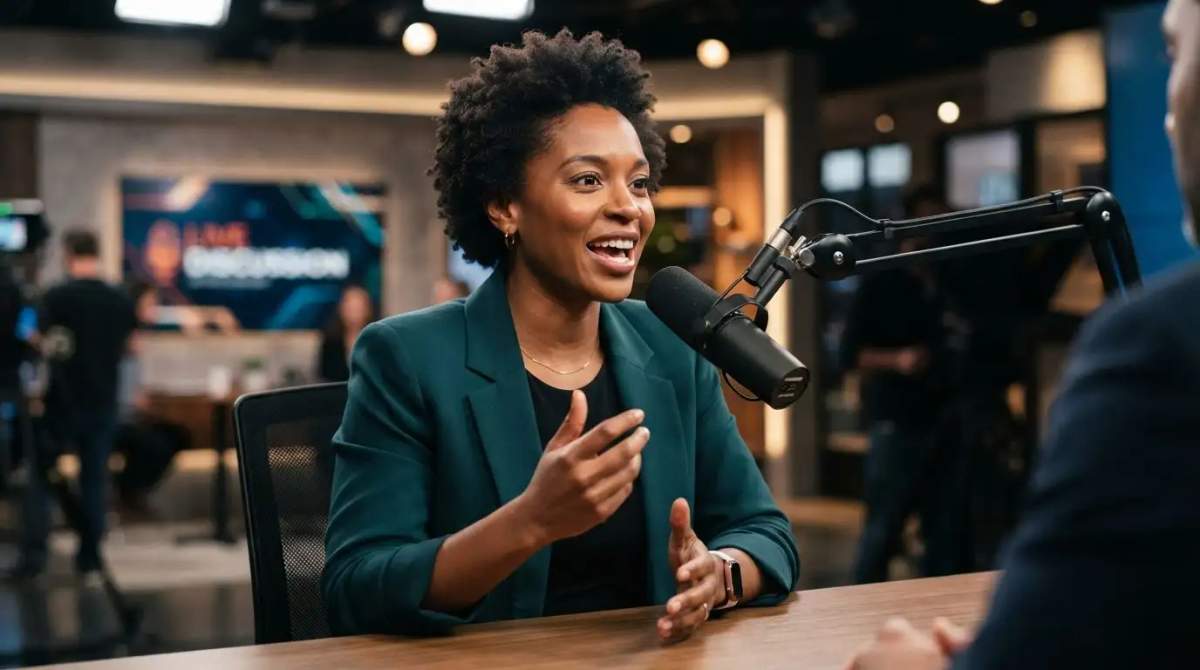
A talking head video typically shows a person speaking directly to the camera. It can be used for social media posts, product explanations, advertisements, educational content, corporate communication, tutorials, and thought leadership.
While highly produced commercials have their place, talking head videos can offer an impressive return on investment because they are relatively simple to produce while still creating a strong sense of human connection.
For businesses looking for efficient AI video production services, talking head content can also be produced and scaled using AI avatars, AI voices, professional editing, and reusable templates.
What Makes Talking Head Videos Different?
The biggest advantage of a talking head video is its simplicity.
The viewer sees a person communicating directly with them.
There is little visual distraction.
That direct communication can make complex information easier to understand and can help a brand feel more approachable.
A talking head video can be as simple as:
Person + Camera + Message
But the format can also include captions, graphics, screen recordings, product demonstrations, animations, and B-roll.
The format is flexible enough to work across many industries.
1. They Build Trust Quickly
People naturally respond to people.
Seeing someone explain an idea directly can create a stronger sense of connection than reading the same information on a webpage.
This is especially valuable for businesses where trust plays an important role.
For example:
- Consultants can explain their expertise.
- Founders can introduce their companies.
- Doctors and professionals can educate audiences.
- Software companies can demonstrate products.
- Creators can share advice.
- Brands can answer customer questions.
The person becomes part of the communication.
That human element can make the brand feel more accessible.
2. Talking Head Videos Are Relatively Easy to Produce
A traditional commercial can require extensive planning.
Talking head content can be much simpler.
A production may only require:
- A presenter
- Camera or smartphone
- Microphone
- Lighting
- Background
- Script
- Editing
This reduces the amount of production infrastructure required.
For brands producing content consistently, this can create significant savings.
Instead of spending an entire production budget on one major video, a company can potentially create many pieces of talking head content.
3. They Are Ideal for Short-Form Content
TikTok, Instagram Reels, YouTube Shorts, and LinkedIn have created enormous opportunities for short-form video.
Talking head videos fit naturally into these platforms.
A presenter can explain an idea in 30 seconds, answer a question, share a tip, or introduce a product.
The format also makes it easy to create content regularly.
For example, a business could create a weekly series:
Monday: Industry tip
Wednesday: Customer question
Friday: Product insight
This consistency is often more valuable than producing one expensive video every few months.
4. They Make Expertise More Visible
A brand's expertise is one of its most valuable marketing assets.
But expertise isn't always easy to communicate through static content.
Talking head videos give experts a direct way to share their knowledge.
A cybersecurity company can explain common security mistakes.
A financial company can discuss market concepts.
A software company can demonstrate productivity techniques.
A creative agency can discuss advertising trends.
The audience doesn't just see the company's logo.
They see the people behind the expertise.
This can strengthen thought leadership and brand authority.
5. They Can Support the Entire Customer Journey
Talking head videos aren't limited to awareness campaigns.
They can be used throughout the customer journey.
Awareness
Short educational videos can introduce a brand to new audiences.
Consideration
A presenter can explain a product or compare solutions.
Conversion
A salesperson or spokesperson can address objections and explain benefits.
Onboarding
A presenter can guide new customers through the product.
Retention
Videos can provide tips, tutorials, and ongoing education.
This versatility makes talking head content particularly valuable.
6. They Are Easy to Repurpose
A single talking head recording can produce multiple pieces of content.
For example, a 10-minute expert video could become:
- One YouTube video
- Five short clips
- Several social posts
- Multiple quote graphics
- An email newsletter
- A blog article
- FAQ videos
This is where the ROI becomes even more interesting.
The value isn't limited to the original video.
The recording becomes a source of additional content.
7. AI Is Making Talking Head Production More Scalable
Traditional talking head videos still require a person to be available for recording.
AI introduces another possibility.
Brands can use AI avatar video services to create digital presenters that deliver approved scripts.
This can be particularly useful when a company needs frequent educational or promotional videos but doesn't want to repeatedly schedule filming.
For example, a software company could create a digital presenter for product tutorials and generate new videos whenever features change.
AI can also help create different versions of the same video for different audiences and platforms.
8. They Work Across Multiple Industries
Talking head videos are not limited to one niche.
They can work for:
- SaaS
- Technology
- Education
- Healthcare
- Finance
- Real estate
- E-commerce
- Professional services
- Tourism
- Creative agencies
- Startups
The format changes depending on the audience and subject matter.
A technology brand might use screen recordings alongside the presenter.
A healthcare organization might use educational graphics.
An e-commerce company might combine a creator-style presenter with product demonstrations.
The underlying format remains the same.
What Determines the ROI of a Talking Head Video?
The format alone doesn't guarantee results.
ROI depends on execution.
A talking head video needs a strong:
Hook
The opening should immediately establish why the viewer should pay attention.
Script
The message should be clear and focused.
Presenter
The person delivering the content should match the brand and audience.
Visual quality
Clear audio, appropriate lighting, and good framing make a significant difference.
Editing
Captions, B-roll, graphics, and cuts can maintain attention.
CTA
The viewer should understand what to do next.
A simple production with excellent execution can outperform an expensive production with a weak message.
Common Talking Head Mistakes
Starting too slowly
Long introductions can cause viewers to leave.
Reading instead of communicating
A presenter should sound natural rather than simply reading words from a page.
Poor audio
Viewers may tolerate average video quality, but poor audio can quickly make content difficult to watch.
No visual variation
Even a talking head video can become repetitive if nothing changes for an extended period.
Too much information
Trying to communicate five ideas in one short video can make the message confusing.
No clear purpose
Every video should have a reason for existing.
Ask:
What should the viewer learn, feel, or do after watching this?
How to Increase Talking Head Video ROI
The best way to improve ROI is to treat talking head videos as a content system.
Instead of producing one video, build a repeatable workflow.
Create templates for:
- Hooks
- Scripts
- Captions
- Branding
- Intros
- Outros
- Calls-to-action
- Editing styles
Then produce content consistently.
AI tools can further accelerate the workflow by assisting with scripting, editing, captions, voice generation, avatars, and content variations.
This makes it possible to create more content without proportionally increasing production effort.
Talking Head Videos vs. High-End Commercials
High-end commercials are excellent for major campaigns.
They can communicate brand identity through cinematography, locations, actors, music, and visual storytelling.
But they are not always the most efficient format for everyday communication.
Talking head videos can be better suited for:
- Frequent social content
- Educational content
- Product updates
- Tutorials
- Thought leadership
- Customer questions
- Corporate communications
The two formats can therefore work together.
A brand might use a cinematic commercial for a major launch and talking head videos to maintain engagement throughout the rest of the campaign.
How ContentMesh Can Help
At ContentMesh, talking head content can be produced using both traditional and AI-powered approaches.
Depending on the project, a brand can use a real presenter, an AI avatar, voiceover, animation, screen recordings, or a combination of these elements.
The focus is on creating content that communicates clearly while remaining efficient to produce and easy to repurpose.
For brands that need regular video content, this can turn talking head videos from occasional posts into a scalable content engine.
Final Thoughts
Talking head videos may not have the visual complexity of a large commercial, but that's exactly why they can be so effective.
They are simple, flexible, relatively inexpensive to produce, and capable of creating a direct connection between a brand and its audience.
When combined with strong scripting, professional editing, and a clear content strategy, talking head videos can deliver significant value.
And with AI-powered production, brands can take that format even further—creating more variations, updating content faster, and scaling production across multiple platforms.
The highest ROI format isn't necessarily the video that costs the most to produce.
It's the video that communicates the right message to the right audience at the right time—and can be produced consistently enough to keep working.
Ready to Scale Your Brand with Custom AI Video Production?
Let ContentMesh build high-performing AI video ads, product showcases, animations, or custom avatars for your brand.